


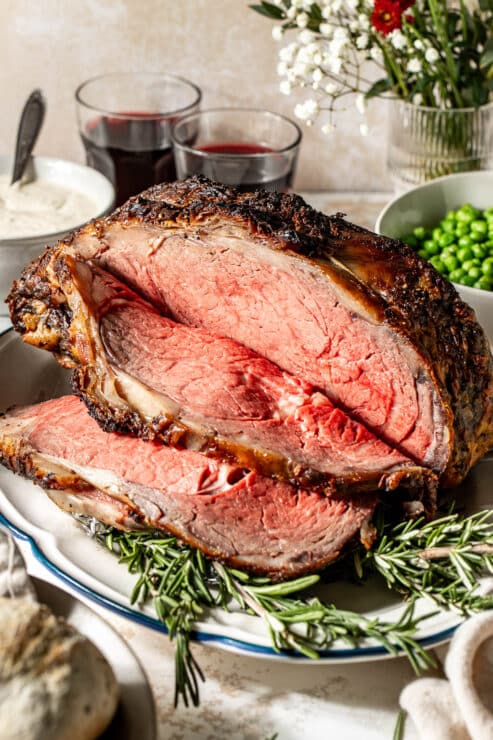
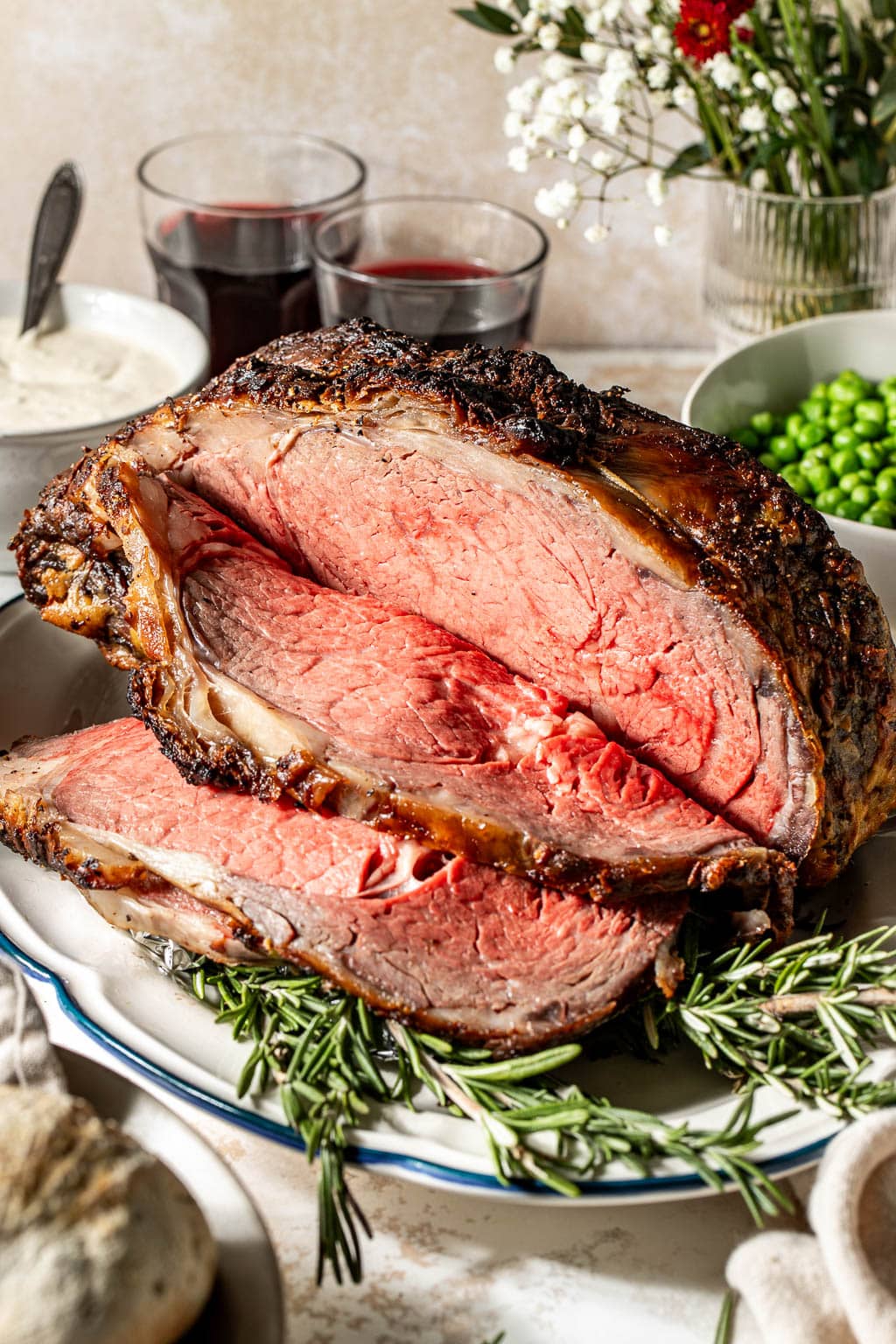
This Reverse-Sear Prime Rib recipe yields absolutely perfect prime rib every single time! This is my go-to prime rib recipe for a smaller crowd, and it never fails. It’s always cooked perfectly inside with tons of flavor. Don’t skip the horseradish sauce, it totally makes the dish!
“I poured through recipes from the ultra simplistic to the super involved but this one was perfect. Simple ingredients and easy-to-follow instructions, yet absolutely delicious and impressive presentation and flavor. You’ll impress your guests and just maybe create a new family tradition! I know I did!!” – Alberto, So Much Food reader
Table of contents
The Science Behind the Reverse Sear Method
It’s called the “reverse sear” because it flips what we have been taught about cooking meat on its head.
For so long, we’ve been told that to cook a steak (or any cut of beef) you should sear it to “lock in juices.” This thought has been proven to be definitively false many times over. Searing doesn’t lock in juices, but it does add flavor and thus needs to be incorporated somehow.
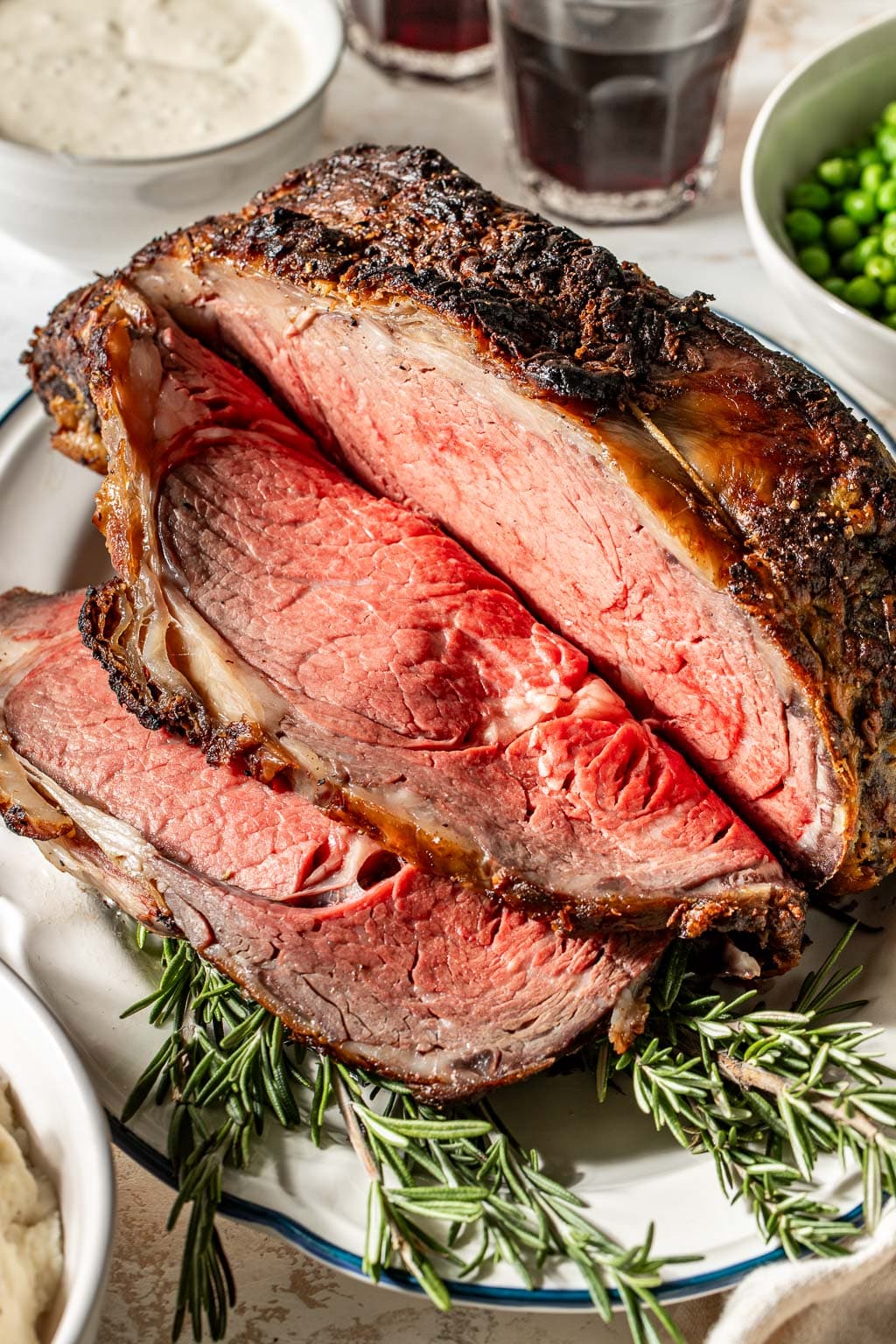
Have you ever eaten a prime rib with a ring of overcooked meat at the edges with a medium-rare interior? This comes from uneven cooking. The exterior gets too hot before the inside can cook to the correct temperature.
The reverse sear corrects this! You cook your prime rib low and slow to ensure a perfect medium-rare edge to edge and then finish in a super hot oven to create a flavorful crust. Don’t worry, my prime rib recipe is SUPER EASY to follow — any home cook can follow these steps!
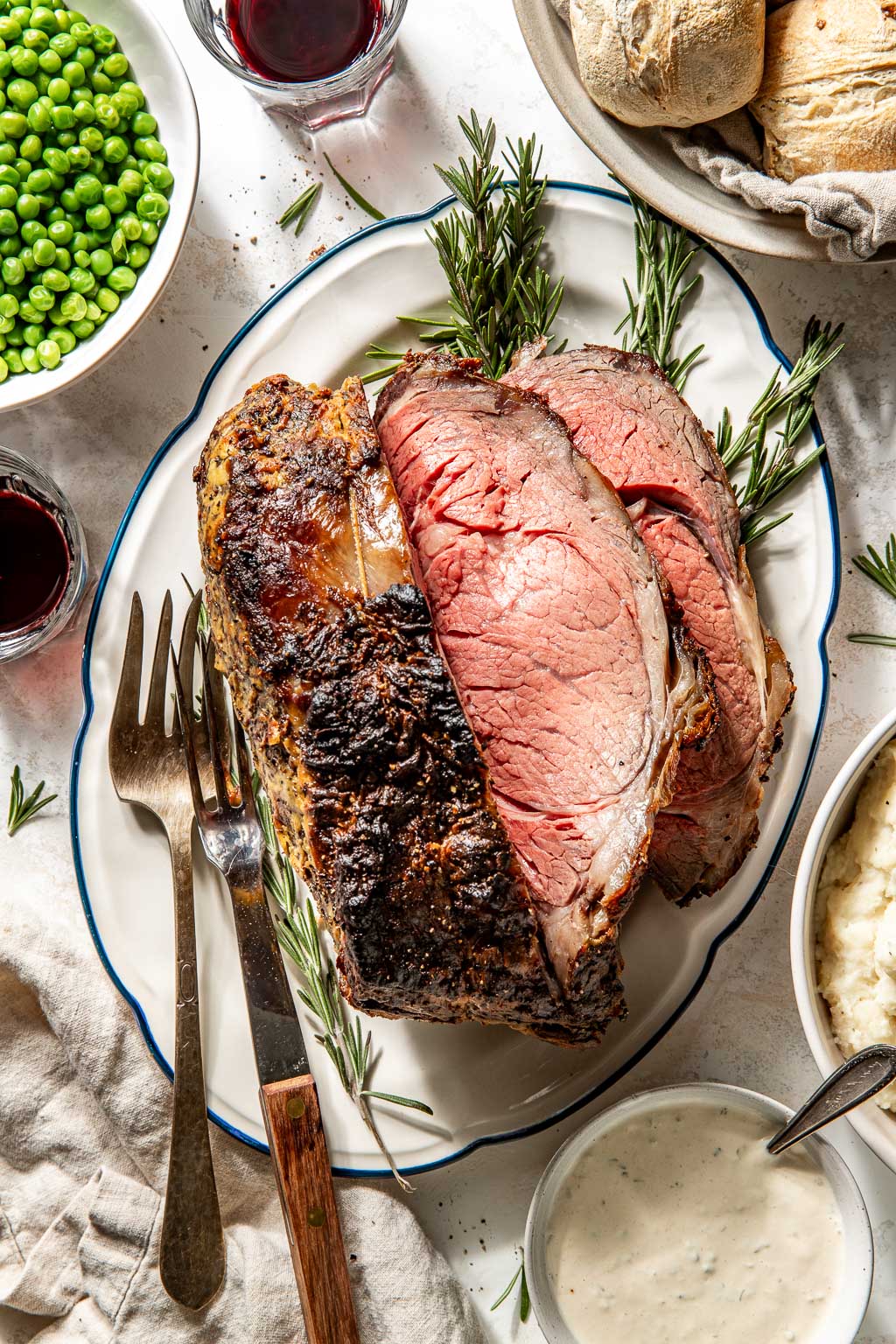
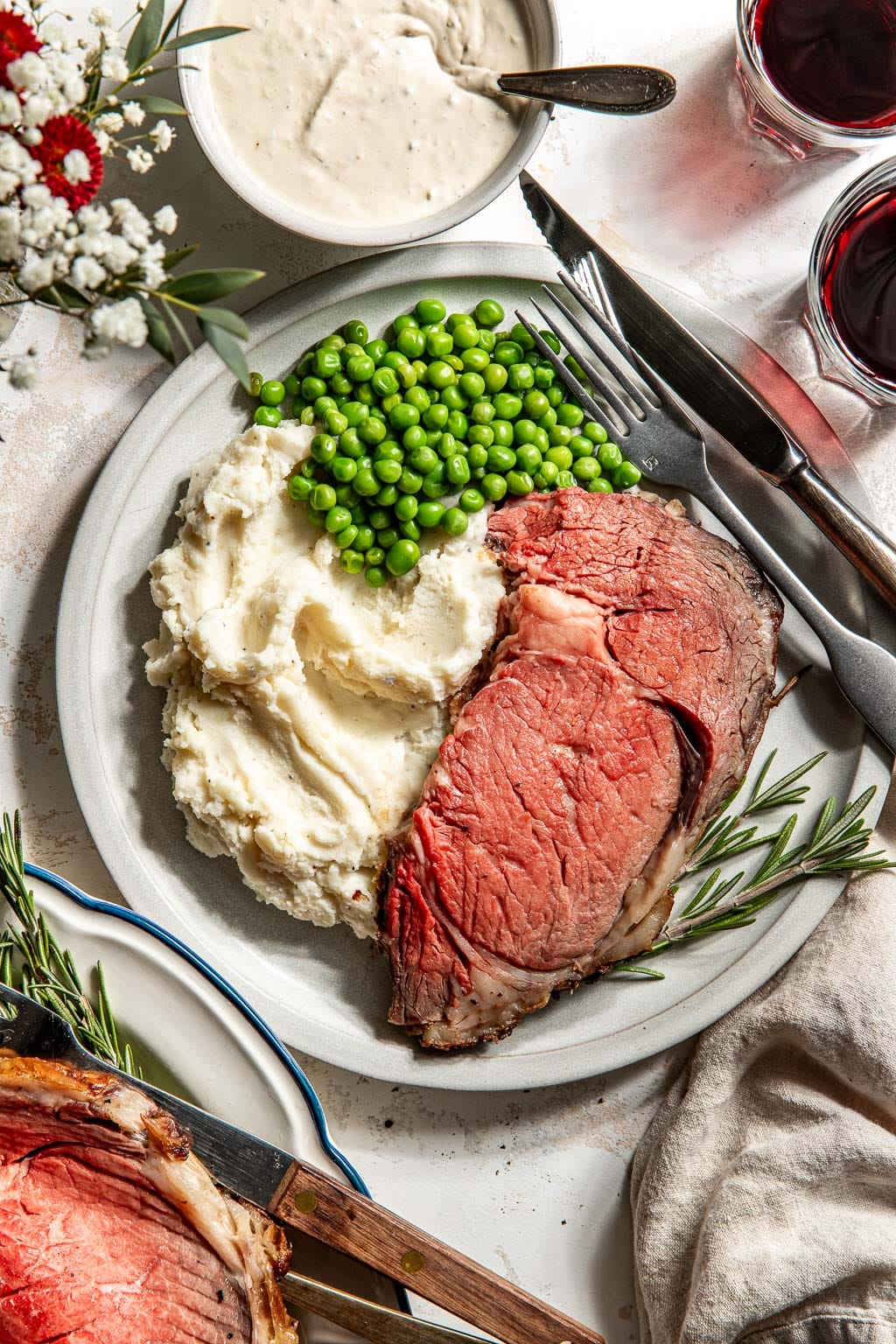
Jenny’s Tips for Selecting the Right Prime Rib Roast (Size and Grade Suggestions)
Size: For this recipe, you’ll want a standing rib roast. I usually make a fairly small prime rib because it’s just me and my husband, so I opt for 4-5 pounds (2-3 rib bones) and always do bone-in for flavor. This size of prime rib will comfortably feed 4 to 6 people (or make for planned leftovers!). Head to a butcher shop for the best rib roasts and select a well-marbled piece.
If you are looking to feed more people, adjust the sizing accordingly. A 4-5 rib (7-8 pound) roast can feed anywhere from 8-10 people depending on the sides.
Grade: Note that just because you are ordering a “prime” rib, it doesn’t mean that you are getting USDA Prime. Most “prime ribs” we get from the market are actually USDA Choice quality. That being said, choice cuts often boast plenty of marbling at a more economical price point. If you really want to splurge for a special occasion, head to your butcher and request a “prime” grade standing rib roast.
Special Tools You’ll Need
Ingredients for the Spice Rub and Horseradish Sauce
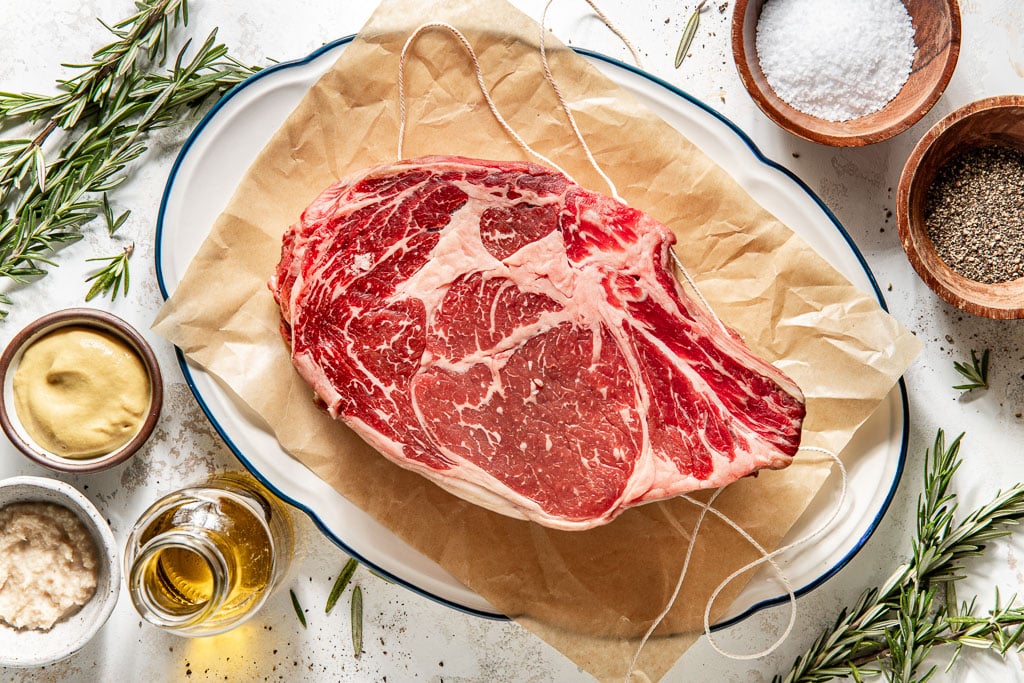
- Fresh rosemary. I love the flavor that roasting the prime rib on the rosemary gives it. You could also add some thyme and sage.
- Dijon. I love coating beef with dijon, it’s just the most perfect savory flavor!
- Horseradish. You want to use prepared horseradish here which is found refrigerated, often near the seafood at your local grocery store. Do not use cream of horseradish found at room temperature in the condiment aisle.
- Salt and pepper. The kind of salt you use matters! I always use kosher salt and freshly cracked pepper. Make sure to season the roast liberally.
How to Reverse Sear a Prime Rib
Jenny’s Tip: Save your prime rib bones for making stock!
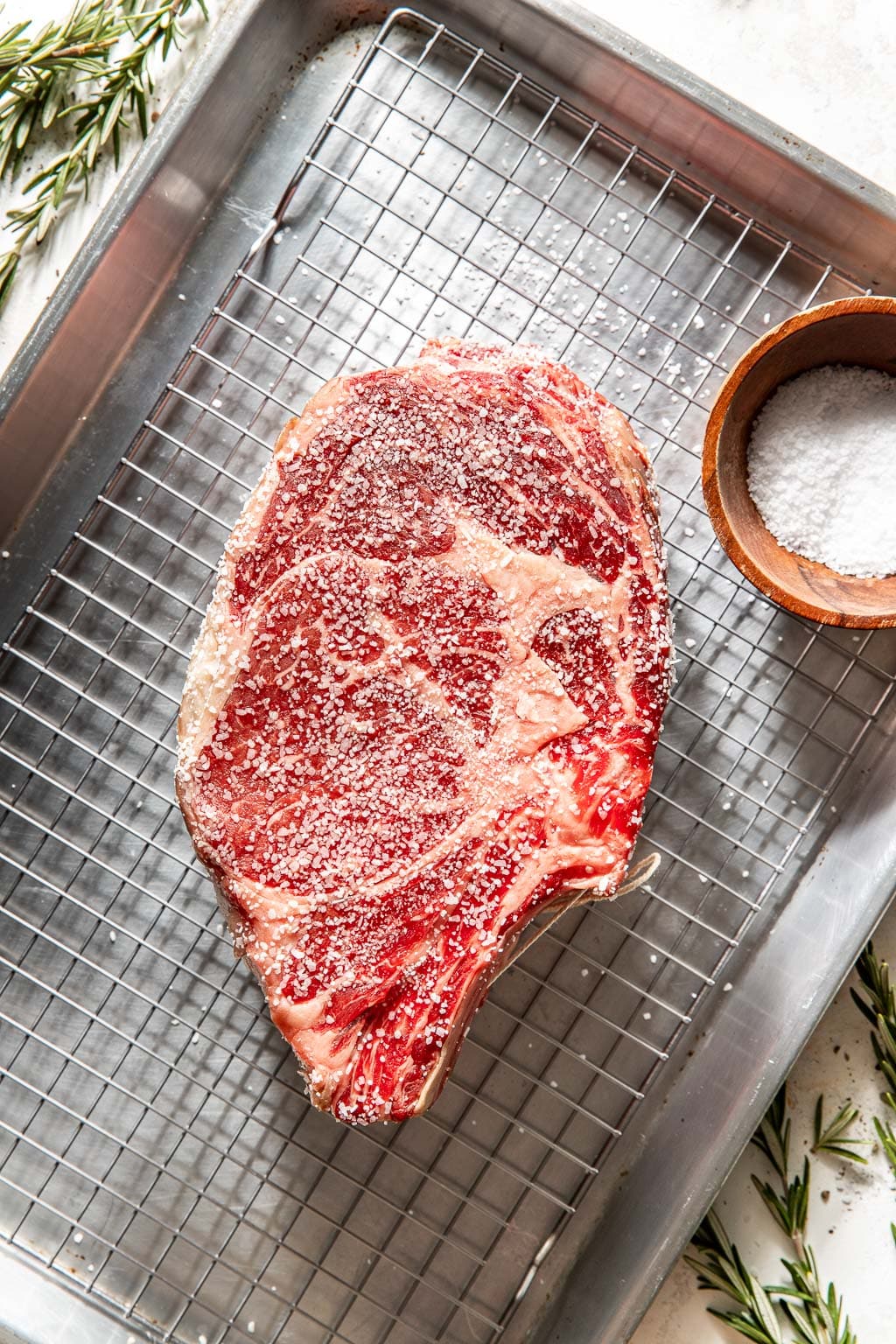
- Season and let dry for 16 hours. This sounds more complicated than it really is! Just rub the 5-pound prime rib all over with kosher salt and then place in the fridge uncovered the day before you cook it.
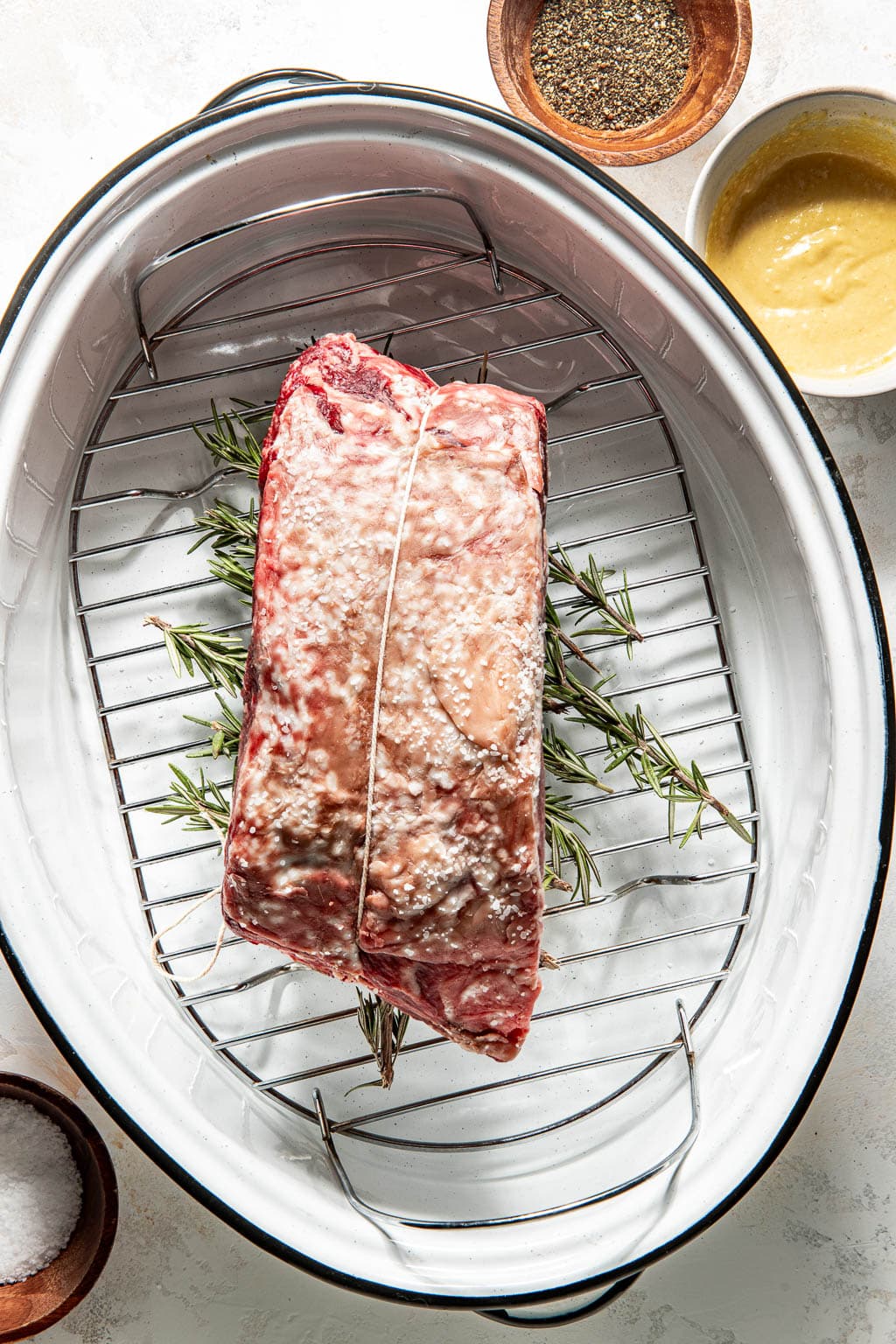
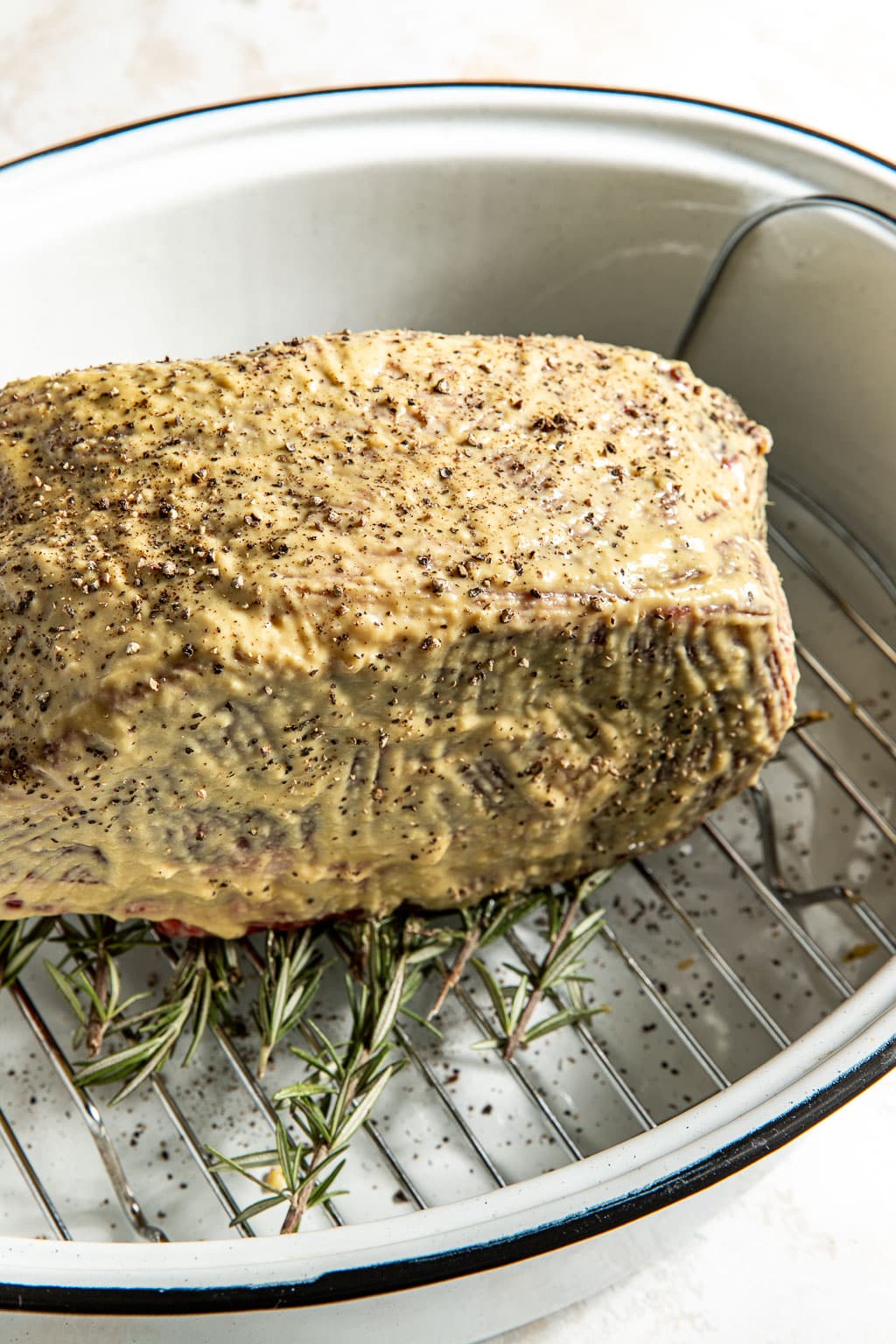
- Slather with wet rub. This is where the horseradish, Dijon, and olive oil come into play. Rub the mixture all over the prime rib, then place on a roasting pan fitted with a rack. I like to put rosemary sprigs underneath the prime rib for fragrant flavor.
- Roast. A 4- to 5-pound prime rib needs to roast for 3 1/2 to 4 hours at 225ºF.
- Let rest for 30 minutes. Tent the prime rib loosely with foil while it rests.
- Reverse sear in the oven. Crank up the oven to 550ºF (or as high as your oven will go) and sear the prime rib for just 10 minutes or so to crisp up the outside.
- Rest for 10 more minutes before carving. I typically make the horseradish sauce at this point.
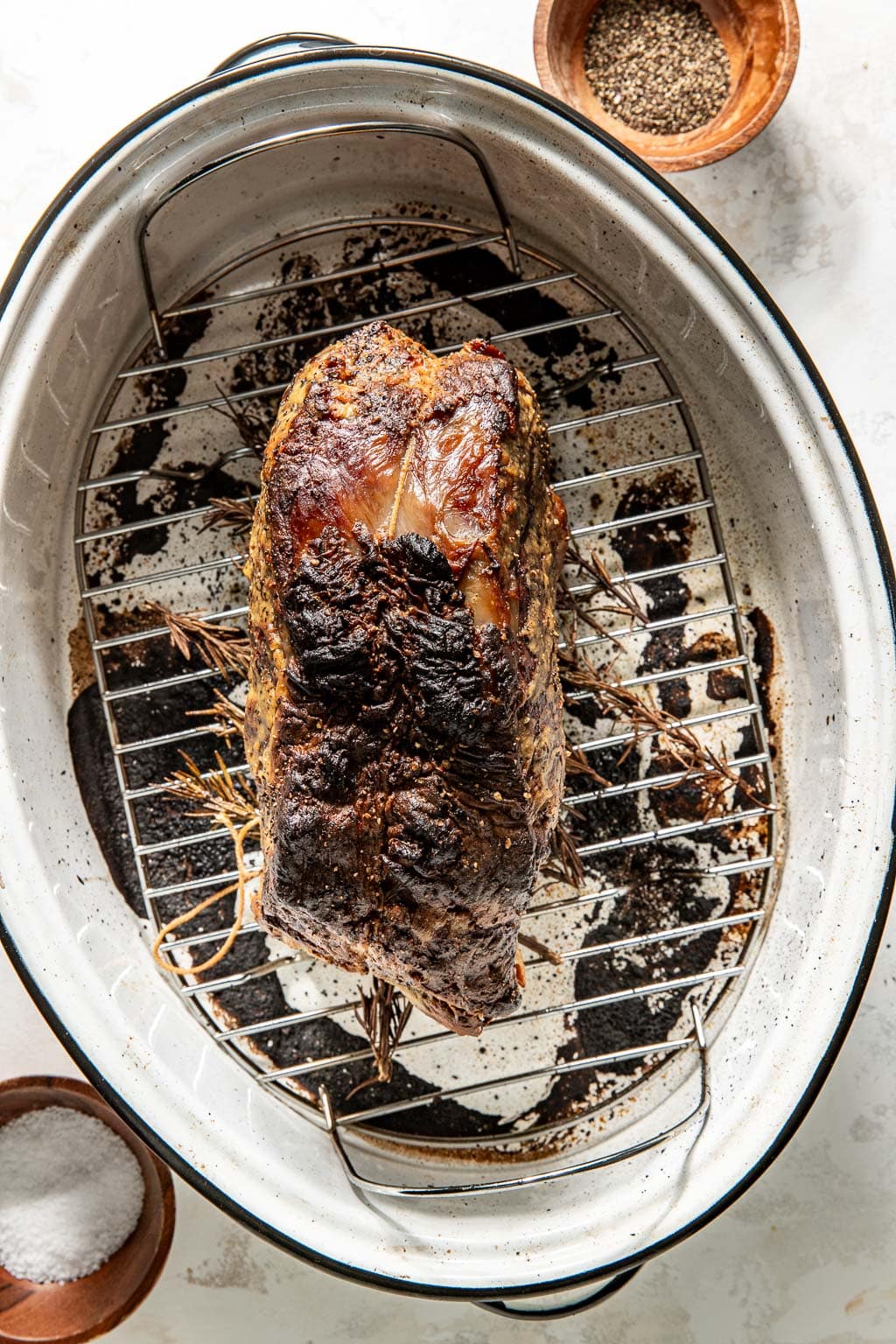
Determining the ‘Doneness’ of Prime Rib
Prime rib is best served rare or medium-rare. Once it’s overcooked, you can’t un-cook it and since it’s an expensive cut of meat, you don’t want to leave the cooking to chance.
Invest in a dependable probe thermometer for cooking all kinds of meats. Keep in mind that the temperature of the meat will rise 5 degrees or so as it rests. For best results, pull at the temperatures listed below.
- Rare roast: 115°F
- Medium-rare roast: 120°F
- Medium roast: 130°F
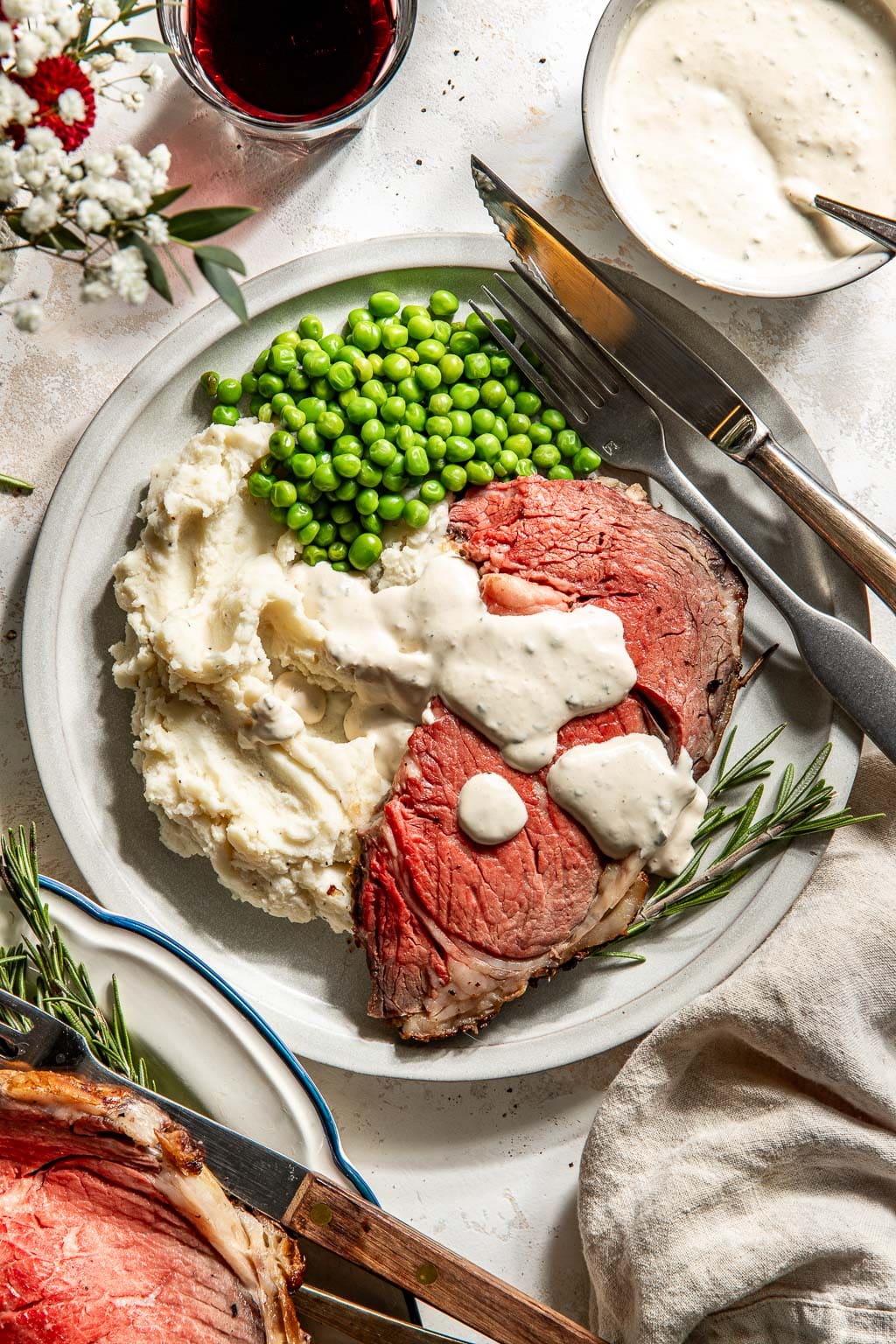
Sides to Serve with Your Prime Rib
- Mashed potatoes. Roasted Garlic Mashed Potatoes, Sour Cream and Onion Mashed Potatoes, Caramelized Onion and Bacon Mashed Potatoes
- Vegetable sides. Roasted Carrots, Garlic Sautéed Green Beans, Green Bean Casserole, Brussels Sprouts Gratin
- Rolls. Honey Pumpkin Dinner Rolls, Brioche Dinner Rolls, Fluffy Dinner Rolls
- Salads. Kale Caesar Salad, Loaded Wedge Salad, Little Gem Caesar Salad
If you do give this recipe a try, I love hearing about it! Leave a comment with a star rating below. Be sure to subscribe to my weekly newsletter and never miss a new recipe! You can also snap a photo & tag @JENNYGOYCOCHEA on Instagram.
More Holiday Mains You’ll Love
- Herb-Crusted Prime Rib
- Bourbon Glazed Ham
- Steak au Poivre
- Slow Roasted Turkey Thighs
- Turkey Meatloaf
- Herb Roasted Beef Tenderloin
This post contains affiliate links from which I receive a small commission at no additional cost to you. Affiliate links allow me to keep providing great recipes for free and I never recommend products that I don’t love and personally own.
Reverse-Sear Prime Rib Recipe
Ingredients
Prime Rib
- 4-5 lb. bone-in standing rib roast
- Kosher Salt
- Freshly ground pepper
- Rosemary Sprigs
- 3 tablespoons dijon mustard
- 1 tablespoon olive oil
- 1 tablespoon prepared horseradish
- horseradish sauce, for serving
Instructions
- The day before you plan to cook the prime rib, season the roast liberally all over with kosher salt. Place it on a plate or small baking dish and leave it uncovered in the fridge for at least 16 hours. This allows the outside to dry for a better crust and lets the salt permeate past the outer later.
- Preheat an oven to 225ºF. Place the roast, fat cap up, in a roasting pan with a rack or on a rimmed baking sheet with a wire rack. Nestle the rosemary sprigs under the roast. Mix together the dijon mustard, horseradish, and olive oil and liberally brush all over the roast. Coat with lots of freshly cracked black pepper.
- Insert a probe thermometer into the middle of the prime rib. Place the roasting pan in the oven and cook until the internal temperature reaches 120ºF (for medium-rare, see chart below for suggested temperatures), about 3 1/2 – 4 hours.
- Remove the roast from the oven and tent loosely with foil, and allow the meat to rest for at least 30 minutes, up to an hour and a half.
- Right before you plan to serve, set the oven to 550ºF (or as high as your oven will go) and return the roast to the oven for 10 minutes or so, until the outside is well-browned and crisp. Remove from oven, rest 10 minutes, then carve.
- To make the horseradish sauce: whisk together all the ingredients until smooth. Season to taste with salt and pepper. Store in the fridge until ready to serve.
Notes
- Rare roast: 115°F
- Medium-rare roast: 120°F
- Medium roast: 130°F
Nutrition
You might also like...
-
 Holiday
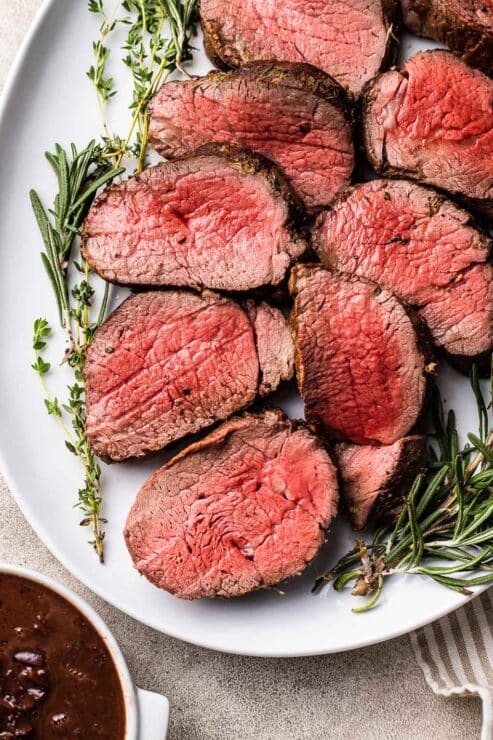
 Herb Roasted Beef Tenderloin
-
 Gluten Free
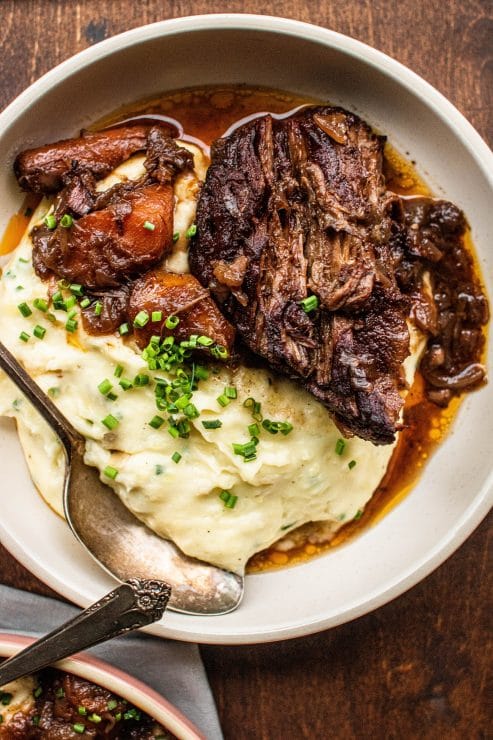
 Red Wine Braised Beef
-
 30 Minute Meals
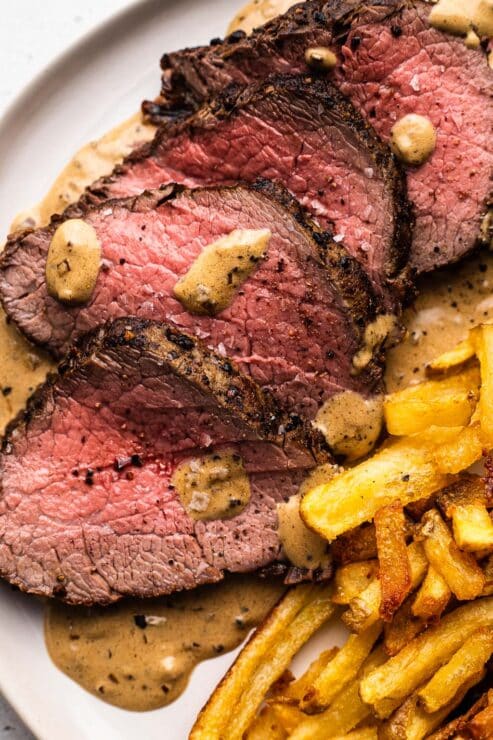
 Steak au Poivre
Rate & Review This Recipe
10/10!!! Made for my family for Christmas Eve dinner. So easy to follow. Turned out PERFECTLY!
yay!
2020 meant a smaller Christmas gathering than normal, so I decided to try my first prime rib. I poured through recipes from the ultra simplistic to the super involved but this one was perfect. Simple ingredients and easy-to-follow instructions, yet absolutely delicious and impressive presentation and flavor. You’ll impress your guests and just maybe create a new family tradition! I know I did!!
Our Christmas Eve tradition is prime rib dinner. First year trying this recipe and this was hands down our best one ever.
So we made this for Christmas and we bought a GIANT prime rib to have some for the next day. We have none for tomorrow. It was so good that we made ourselves sick off it. This is easily the best thing I’ve ever cooked. AMAZING.
That sounds amazing!
Thanks for your posting. I would’ve enjoyed your website so much more if you didn’t have all these ads popping up. Very annoying. But thanks for the website I’m cooking a prime rib. Anyway, merry Christmas.
These ads provide me income so that I can make and test great recipes and then provide them to you for free. I think you’ll be hard pressed to find a recipe on the internet without ads. Merry christmas!